What Every Irish Punter Needs to Know Before June
- The 48-team format means 104 matches and unprecedented betting opportunities — but the expanded knockout structure changes how you should value outright bets
- Scotland returns to the World Cup for the first time since 1998, facing Brazil, Morocco, and Haiti in Group C with realistic qualification chances
- Argentina and France offer the strongest outright value at current prices, while Brazil and England are overpriced relative to their squad situations
- Irish bookmakers are offering competitive World Cup markets — fractional odds remain standard, but decimal formats are increasingly available
- All group stage matches in North America mean late-night viewing in Ireland, with most kick-offs between 20:00 and 02:00 IST
My Verdict: Why This World Cup Changes Everything
I still remember the exact moment Ireland's World Cup dream ended — 26 March 2026, Czechia 2-2, penalties. Alan Browne stepped up, the ball sailed over the bar, and six consecutive tournaments without Ireland became our reality. A week later, I am sitting in my Dublin office, staring at the World Cup 2026 betting markets, and I have never been more excited about a tournament we will not be playing in. That is not a contradiction. That is an opportunity.
After nine years compiling odds and analysing football betting markets, I can tell you this tournament is unlike anything we have seen. The expansion to 48 teams has created structural inefficiencies that bookmakers are still learning to price. The three-nation hosting format across the USA, Mexico, and Canada means time zones, travel distances, and climate variations will affect matches in ways the odds do not fully reflect. And for the first time since France '98, Scotland will be at a World Cup — giving every Irish punter a team worth backing with genuine emotional investment.
The numbers tell a story that should make any serious bettor pay attention. FIFA's prize pool has ballooned to over $1 billion, meaning even smaller nations have unprecedented resources for preparation. The 104-match schedule stretching from 11 June to 19 July creates more betting opportunities than any previous World Cup — and more chances for the market to misprice outcomes. When I look at the current outright odds, I see at least three teams trading at prices that do not match their actual knockout-stage potential.
My approach to World Cup 2026 betting centres on three principles I have developed over nearly a decade in this industry. First, the expanded format rewards consistency over single-match brilliance — teams that grind through group stages without drama often go deep. Second, the North American summer creates conditions that favour certain playing styles, particularly those comfortable in humidity and altitude. Third, the sheer number of matches means value will emerge throughout the tournament, not just before kick-off.
World Cup 2026 represents the most significant structural change to the tournament since 1998. The 48-team format, tri-nation hosting, and expanded prize pool have created betting market inefficiencies that experienced punters can exploit.
This guide is my blueprint for World Cup 2026 betting. I will break down the tournament format and its betting implications, highlight the markets where I see genuine value, and give Scotland's chances the thorough analysis they deserve. Whether you are planning a single outright bet or building accumulators throughout the group stage, the strategy matters more than ever when 48 teams are competing for the trophy.
The bookmakers have had months to set their prices, but they are working with the same uncertainty we all face — nobody has ever seen a 48-team World Cup before. That uncertainty is where profit lives.
Before diving into specific picks and markets, let me explain exactly how this expanded format reshapes the betting landscape.
The 48-Team Format: What It Means for Your Bets

My phone lit up with messages when FIFA confirmed the 48-team format would debut in 2026. Most punters I know had the same reaction: more teams means more chaos, which means more value. That instinct is correct, but the details matter more than the headline.
The structure works like this: 48 teams split into 12 groups of four, with the top two from each group advancing to the Round of 32. Additionally, the eight best third-placed teams qualify — meaning 32 of 48 nations reach the knockout stages. For context, in the traditional 32-team format, 16 of 32 advanced. The new format allows two-thirds of participants to survive the group stage, fundamentally altering how I approach outright and group betting.
The 2026 World Cup will feature 104 matches over 39 days — 40 more matches than the 2022 tournament in Qatar. That is 40 additional opportunities for sharp bettors to find mispriced lines.
The third-place qualification route creates what I call the "survival bracket" effect. Teams no longer need to win their group or even finish second — four points from three matches often suffices to advance. This changes optimal squad management entirely. Managers will rotate more aggressively in group matches, prioritising fitness for the knockout rounds over topping the group. For betting purposes, this means group-stage matches involving already-qualified teams become harder to predict. The motivation factor, always crucial in tournament football, becomes even more complex to assess.
Hosting duties split across the USA, Mexico, and Canada introduces another variable absent from previous World Cups. The geographic spread covers four time zones and altitudes ranging from sea level in Miami to 2,240 metres in Mexico City. Squad depth matters more when some teams will face three different climates within ten days. Brazil, with their quality throughout the roster, handle this better than Belgium, whose starting eleven masks a weaker bench. The bookmakers account for squad quality in their outright odds, but travel and altitude fatigue remain underpriced factors in my assessment.
Group stage betting requires a recalibration from previous tournaments. The traditional "group of death" narrative loses power when third place often advances. Instead, I focus on what I term "qualification certainty" — identifying groups where all four teams have legitimate knockout hopes versus groups with one clear favourite and three also-rans. Group C, featuring Brazil, Morocco, Haiti, and Scotland, exemplifies the former: every match carries genuine stakes because even Haiti can dream of a third-place berth.
Round of 32 — the new first knockout round for World Cup 2026, replacing the traditional Round of 16. It features all group winners and runners-up plus the eight best third-placed teams.
The expanded knockout bracket deserves attention from accumulator enthusiasts. More rounds mean more opportunities for favourites to stumble, but they also mean more matches for dominant teams to demonstrate their class. In my , I detail specific accumulator strategies adapted for this format. The key insight: tournament winners now need to win seven matches instead of six, making outright favourites slightly less likely to lift the trophy than raw odds suggest.
What does this mean practically? My betting approach prioritises early group-stage value, where markets reflect 32-team assumptions rather than 48-team realities. I am more selective with outright bets — the true probability of any single team winning has decreased — and more aggressive with match-specific markets where my analysis contradicts consensus pricing.
With the format understood, let me share the outright bets I am genuinely considering as we approach June.
Current Outright Odds: My Top 5 Value Picks

Three weeks before qualifying concluded, I placed my first World Cup 2026 outright bet. The price has already shortened, which tells me the market is catching up to what I saw months ago. Finding value in outright markets requires looking beyond the obvious — every punter knows Argentina and France are contenders, but not everyone understands why the current prices represent genuine opportunities.
My value assessment uses a simple framework: compare the bookmaker's implied probability against my own probability estimate, adjusted for the 48-team format. When my number exceeds theirs by more than 5%, I have a bet worth considering. When it exceeds by 10% or more, I am placing money.
Argentina: Defending Champions with Unfinished Business
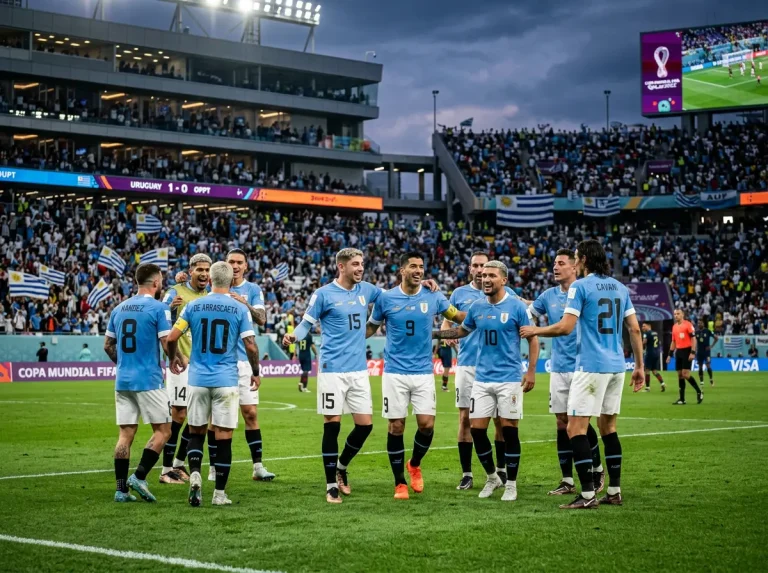
The current price of approximately 5/1 translates to an implied probability of around 16.7%. My assessment: Argentina's true winning probability sits closer to 22%. That 5-point gap represents serious value. Lionel Scaloni's squad combines the tournament-winning experience from Qatar 2022 with a hungry generation of players who want to prove they can win without relying on Messi's individual brilliance. Whether Messi himself features remains uncertain — he will be 38 — but Argentina's system does not depend on him the way it did in 2014 or 2018. The midfield of Enzo Fernández, Alexis Mac Allister, and Rodrigo De Paul controls matches regardless of who plays ahead of them.
My rating: 9/10 for value
France: The Qatar Heartbreak Factor
Losing the 2022 final on penalties left a psychological scar that Didier Deschamps has spent four years healing. France's squad depth arguably exceeds even Argentina's — Kylian Mbappé captains a forward line that could include any combination of Ousmane Dembélé, Marcus Thuram, Randal Kolo Muani, and whatever young talent emerges before June. At roughly 11/2, France offers value because the market remembers their Euro 2024 struggles more vividly than their consistent major-tournament performances over the past decade. Two World Cup finals in three tournaments tells you everything about this squad's knockout pedigree.
My rating: 8/10 for value
Spain: Euro 2024 Champions Finding Their Level
The market has Spain at approximately 8/1, which feels about right — but I lean towards them offering marginal value. The youth movement that won Euro 2024 has matured. Lamine Yamal will be 18 during the tournament, Pedri controls midfield with veteran composure, and Nico Williams provides the direct threat that Spanish teams have historically lacked. My concern: their path through the bracket looks demanding, with potential quarter-final and semi-final opponents from Groups H and I creating tough matchups early. Still, the pure footballing quality earns them a spot in my value considerations.
My rating: 7/10 for value












Germany: The Home-Adjacent Advantage
Germany finished in the middle of the pack at Euro 2024, but something shifted during that tournament. The Nagelsmann era found its identity, and the Musiala-Wirtz-Havertz trio finally clicked. At around 9/1, Germany offers intriguing value for a specific reason: North American conditions suit their style. The technical, possession-based football that wilts in Middle Eastern heat thrives in American summers. Add the large German-American population creating supportive atmospheres in several host cities, and you have environmental factors the odds do not capture.
My rating: 7/10 for value
Brazil: The Cautionary Pick
I include Brazil not as a value recommendation but as a warning. The market has them at approximately 4/1 — the shortest price in the tournament — implying roughly 20% win probability. My assessment: 14-16% at best. Brazil's squad talent is undeniable, but their recent tournament performances tell a different story. Copa América disappointments and the Qatar 2022 exit to Croatia on penalties suggest a team that peaks too early or cracks under pressure. The Seleção name still commands premium pricing that their actual knockout performances no longer justify.
My rating: 4/10 for value
The best outright value currently sits with Argentina at 5/1 and France at 11/2. Brazil's 4/1 represents poor value relative to their recent knockout performances. For a deeper comparison of prices across Irish bookmakers, see my dedicated odds comparison.
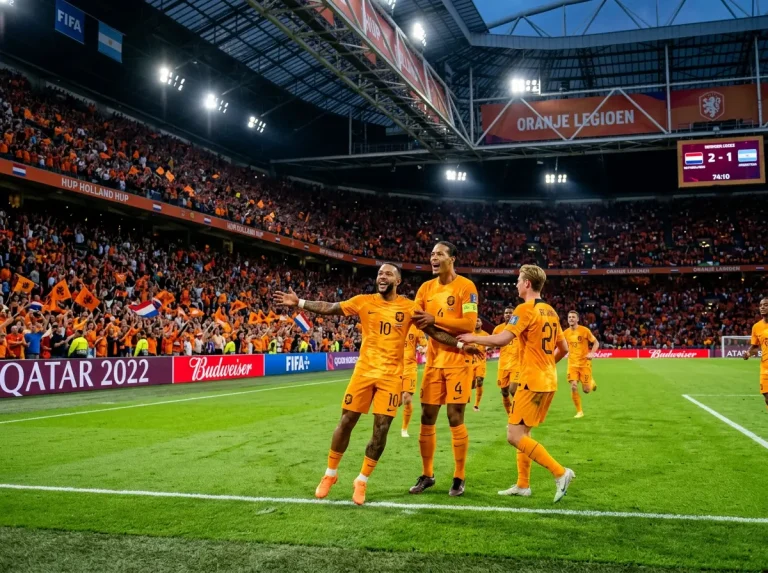
Beyond these five, watch for movement on Portugal, Netherlands, and England. All three could see prices lengthen or shorten significantly based on pre-tournament friendlies and squad announcements. The market remains volatile enough that patient bettors will find windows of value right up until kick-off on 11 June.
Those outright picks represent long-term positioning. But for Irish punters, one team matters more than any statistical projection.
Scotland's World Cup Return: A Celtic Nation's Hope

When Czechia's fifth penalty hit the back of the net on 26 March, ending Ireland's World Cup dream, I felt the collective deflation across every pub in Dublin. Forty-five minutes later, I was checking Scotland's group draw. The Celtic brotherhood runs deep — when we cannot be there ourselves, we adopt our neighbours. And for the first time since 1998, Scotland will be at a World Cup, giving Irish punters a genuine rooting interest with actual betting value attached.
Group C handed Steve Clarke's squad a challenging but navigable path. Brazil tops the group as heavy favourites, Morocco returns after their stunning 2022 run to the semi-finals, and Haiti represents the accessible three points every team needs. The fixture order matters: Scotland faces Haiti first, Morocco second, and Brazil last. That sequencing creates a realistic scenario where Scotland arrives at the Brazil match already qualified, or at minimum needing only a result to advance.
Scotland's last World Cup appearance was France 1998 — 28 years will have passed by the time they face Haiti in Boston. An entire generation of Scottish footballers has grown up without experiencing World Cup football.
The squad Clarke has assembled blends Premier League experience with European competition pedigree. Scott McTominay has evolved from a Manchester United utility player into one of the most influential box-to-box midfielders in European football. Andrew Robertson remains world-class at left-back despite Liverpool's struggles. John McGinn brings the energy and tactical intelligence that makes Aston Villa competitive against anyone. This is not the Scotland of past qualifying heartbreaks — this is a team with genuine knockout-stage capability.
My assessment of Scotland's Group C chances breaks down as follows. The Haiti match on 13 June should deliver three points — anything less represents a significant underperformance given the 46-place FIFA ranking gap. Morocco poses the real test: the Atlas Lions reached the Qatar semi-finals and have only improved since. A draw here would be an excellent result; a win puts Scotland in control of their own destiny. The Brazil match becomes a potential celebration if the job is already done, or a must-not-lose if qualification still hangs in the balance.
| Match | Date (IST) | Venue | My Prediction |
|---|---|---|---|
| Haiti vs Scotland | 13 June, 02:00 | Gillette Stadium, Boston | Scotland Win |
| Scotland vs Morocco | 19 June, 23:00 | Gillette Stadium, Boston | Draw |
| Scotland vs Brazil | 24 June, 23:00 | Hard Rock Stadium, Miami | Brazil Win |
That projection gives Scotland four points — likely sufficient for a third-place finish that advances to the Round of 32 given the new format's qualification pathways. The market prices Scotland to qualify from their group at approximately 6/4, which I consider fair rather than generous. The value lies in specific match markets rather than outright group qualification.
For Irish punters watching from home, the scheduling creates both challenges and opportunities. The Haiti opener kicks off at 02:00 Irish time — a Friday night into Saturday morning affair that demands commitment. The Morocco and Brazil matches land at more civilised 23:00 starts, still late but manageable for the dedicated. If you are planning a World Cup viewing schedule, Scotland's fixtures anchor the calendar.
The emotional investment extends beyond betting slips. Celtic FC's historic Irish connection means thousands of Irish supporters will be cheering for Scotland regardless of odds or outcomes. When I place my Scotland bets, I am not just seeking value — I am participating in a shared experience that transcends the punting mathematics. That said, the mathematics are favourable enough to make the emotional investment financially sensible as well.
For comprehensive coverage of Scotland's World Cup campaign, including match-by-match analysis and live odds tracking, I have prepared a >dedicated Scotland betting guide that will update throughout the tournament.
Scotland represents one specific betting interest. But the 48-team format opens dozens of other markets worth your attention.
Markets Worth Watching: Beyond the Winner

Outright winner gets all the attention, but it is the side markets where sharp bettors make their money at World Cups. I learned this during Russia 2018 when my Colombia to win the tournament bet collapsed in the Round of 16, but my Harry Kane top scorer position returned healthy profit. The lesson: diversify across markets that reward specific analysis rather than hoping one prediction carries the entire tournament.
The 48-team expansion has created new market categories while altering the value proposition in traditional ones. Here is my breakdown of where the betting opportunities genuinely exist.
Top Scorer: Value Beyond the Favourites
☘ World Cup 2026 · Irish Betting
Each-Way Bet Calculator
An each-way bet is really two bets: half your stake on the win, half on a place (top 3, 4 or 5). The place part pays at a fraction of the odds. Perfect for backing a longshot like Scotland or a 33/1 outsider — work out exactly what you get back if it wins, places, or loses.
The Golden Boot market typically prices Mbappé and a few other elite forwards as short favourites, with genuine value sitting at longer prices. What most punters miss: the expanded group stage means more opportunities for players from dominant teams to rack up goals against weaker opponents. Harry Kane, despite England's inconsistent tournament form, plays in a group that could see him score four or five before the knockouts even begin. The 48-team format benefits clinical finishers on strong sides more than it benefits specialists who only perform in tight knockout matches.
Market value rating: 8/10
Group Winner Markets: Structural Advantages















Group winner bets offer cleaner value than tournament outright because you eliminate seven knockout rounds of variance. When Brazil is priced at 1/4 to win Group C, I ask: does that reflect a true 80% probability given Morocco's quality? If I assess Brazil's group-winning probability at 70%, that price represents poor value. Conversely, Group J with Argentina at similar odds faces weaker opposition — Algeria, Austria, and Jordan — making their price more justified. The key is comparing group compositions rather than simply backing short-priced favourites.
Market value rating: 7/10
Correct Score and Match Results: Volume Play
With 104 matches across the tournament, individual match markets create volume opportunities that do not exist in tighter competitions. I focus on group stage matches involving clear mismatches — Germany versus Curaçao, for instance, should produce predictable scorelines that correct-score specialists can exploit. The caveat: heavy rotation in dead rubbers makes late group-stage matches harder to predict accurately. My approach concentrates on matchdays one and two, where managers still field strongest lineups.
Market value rating: 6/10
Player Specials: The Emerging Market
Bookmakers have dramatically expanded player prop markets since Qatar 2022. You can now bet on individual players to score in specific matches, to be carded, to assist, or to be named player of the tournament. The liquidity remains thinner than traditional markets, which means both opportunity and risk. I like player props for backing my convictions — if I believe McTominay will dominate Scotland's midfield, betting him to score anytime across their group matches offers better returns than simply backing Scotland to win individual fixtures.
Market value rating: 7/10
The most consistent value across World Cup markets sits in group-stage match specifics and top scorer positions. Outright tournament winner carries too much variance unless you identify significant mispricing. For detailed market strategies, explore the complete group-by-group breakdown.
Whatever markets you target, track your bets meticulously. World Cup betting stretches over 39 days — long enough for cold streaks and hot streaks to distort your perception of what is actually working. My spreadsheet tracks not just profit and loss, but market type, match stage, and my pre-match confidence level. That data shapes my approach four years later, which is precisely why I maintain it.
Market selection matters, but so does where you place those bets. Irish bookmakers offer distinct advantages for local punters.
Irish Bookmakers Compared: Where to Bet
The best accumulator I ever placed was ruined by poor bookmaker selection. I had picked four correct results across a Champions League night, but the bookie I used capped my payout at half what a competitor would have paid. Since then, I have maintained accounts with multiple operators and check prices before every significant bet. For World Cup 2026, where you place your bets matters as much as what you bet on.
Irish punters benefit from a mature, competitive betting market regulated under the Gambling Regulation Act 2024 and overseen by the new Gambling Regulatory Authority of Ireland. This means consumer protections, responsible gambling tools, and operators competing on price rather than relying on regulatory arbitrage. The practical result: better odds and more promotional value than bettors in less regulated jurisdictions typically receive.
Paddy Power and Boylesports represent the home-grown options with the deepest Irish market expertise. Both offer fractional odds as default — the traditional UK and Irish format — while allowing decimal or American alternatives for those who prefer them. Their World Cup coverage extends beyond basic match betting into extensive specials, enhanced accumulators, and Ireland-specific promotions. Boylesports in particular tends to offer market-leading prices on Scottish football, which translates to favourable odds on Scotland's World Cup campaign given the Celtic fan crossover.
The international operators — bet365 and Betfair most prominently — bring different advantages. Bet365's live betting interface remains the industry standard, with in-play markets updating faster and offering more variety than domestic competitors. For a tournament featuring over 100 matches across multiple time zones, that live betting infrastructure matters. Betfair's exchange model allows you to act as bookmaker, laying outcomes you expect not to happen rather than simply backing predictions. The exchange creates opportunities when you identify overpriced favourites — instead of hoping an underdog wins, you can profit when the favourite simply fails.
Fractional odds — the traditional UK and Irish format showing potential profit relative to stake. Odds of 5/1 mean a €10 stake returns €50 profit plus the original stake. Decimal equivalents multiply stake by the odds directly.
My personal approach uses three accounts actively: one domestic bookmaker for market-leading prices on specific events, bet365 for live betting, and Betfair for exchange opportunities. This setup captures the best price across most markets while ensuring I can execute bets quickly when value appears. Maintaining multiple accounts also protects against the frustration of finding excellent odds only to discover your preferred bookmaker has not yet opened that market.
Whatever bookmaker you choose, verify their World Cup 2026 promotional offerings before committing significant stakes. Enhanced odds on opening matches, accumulator insurance, and free bet offers typically emerge in the weeks before kick-off. These promotions add genuine value when used strategically — just read the terms carefully, as wagering requirements and time limits vary dramatically between operators.
With bookmaker strategy sorted, let me outline the timeline you need for optimal World Cup betting preparation.
Key Dates: Your World Cup 2026 Calendar

The betting calendar for World Cup 2026 extends far beyond the 39 tournament days. Smart punters are already positioning their portfolios, and the next two months offer specific windows where market inefficiencies appear. Here is the timeline I am working from, with annotations on when betting activity should peak.
Pre-Tournament Phase
Squad announcements represent the most significant pre-tournament betting catalyst. Most managers will finalise their 26-player rosters by late May, with some nations releasing provisional larger squads that trim down to the tournament format. Each announcement creates price movement — when a key striker fails to recover from injury, or an emerging talent earns surprise inclusion, the markets adjust. My calendar blocks this period for active monitoring rather than aggressive betting; I prefer to react to confirmed news rather than speculate on rumours.
Pre-tournament friendlies in early June offer final form indicators that occasionally reveal mispriced markets. Germany's preparation matches before Euro 2024 foreshadowed their improved tournament performance. This time around, I am watching France and England particularly closely — both have question marks around squad chemistry that these final tune-up matches will illuminate.
Tournament Schedule Overview
| Phase | Dates | Matches | Irish Time Note |
|---|---|---|---|
| Opening Match | 11 June | Mexico vs South Africa | 01:00 IST (overnight) |
| Group Stage | 11-26 June | 72 matches | Most kick-offs 20:00-02:00 IST |
| Round of 32 | 27-30 June | 16 matches | Evening and overnight IST |
| Round of 16 | 3-6 July | 8 matches | Evening and overnight IST |
| Quarter-finals | 9-10 July | 4 matches | Evening IST |
| Semi-finals | 14-15 July | 2 matches | 01:00 IST |
| Final | 19 July | 1 match | 20:00 IST |
The time zone reality hits hardest during the group stage, where many matches kick off after midnight Irish time. Scotland's opening match against Haiti begins at 02:00 IST — requiring genuine dedication or strategic napping earlier that Friday evening. The knockout rounds shift slightly earlier as the tournament progresses, with the Final mercifully scheduled for 20:00 IST on 19 July.
Betting Calendar Strategy
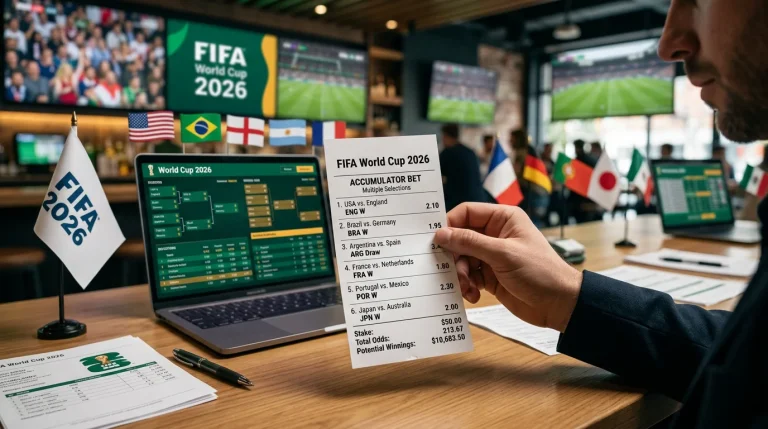



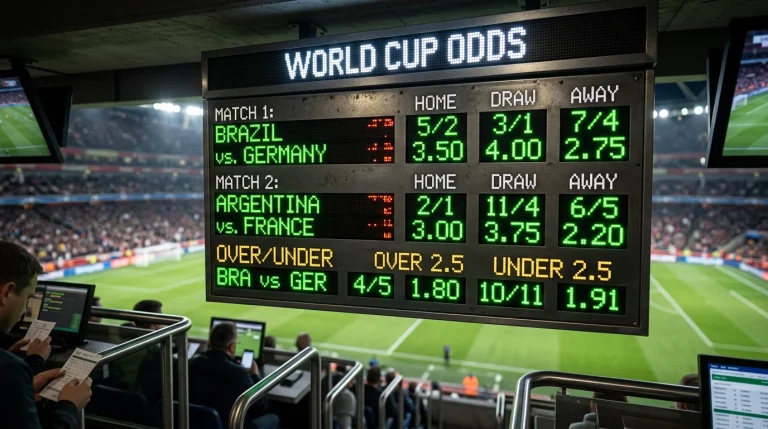
I structure my World Cup betting in three distinct phases. Phase one covers pre-tournament positioning: outright bets, group winner markets, and top scorer selections placed before kick-off. Phase two operates during the group stage: match-by-match betting based on form and rotation patterns that emerge. Phase three targets the knockout rounds: adjusted outright positions based on bracket reality and live betting on individual eliminations.
The optimal betting volume peaks during phase two, where information advantages compound. By matchday three of the group stage, I have seen every team play at least once and can identify which pre-tournament assessments were accurate and which require revision.
That covers the essential framework. Let me address the questions I hear most frequently from Irish punters approaching this tournament.
World Cup 2026 Betting: Your Questions Answered
How does the 48-team format affect World Cup betting odds?
The expanded format creates two significant shifts in betting markets. First, outright winner odds have lengthened slightly across the board because winning the tournament now requires seven matches instead of six, adding an extra knockout round. A team priced at 4/1 in the old format might sit at 5/1 under the new structure. Second, group-stage betting becomes more nuanced because third place often qualifies — meaning "to qualify from group" and "to win group" become more distinct betting propositions. The format rewards careful analysis of each group's qualification dynamics rather than simply backing strong teams to advance.
Is it legal to bet on the World Cup in Ireland?
Yes, sports betting is fully legal and regulated in Ireland. The Gambling Regulation Act 2024 established the Gambling Regulatory Authority of Ireland as the primary regulator, replacing the previous Revenue Commissioners oversight. All major bookmakers operating in Ireland hold appropriate licences and must comply with consumer protection standards. You can bet on World Cup 2026 matches through licensed online bookmakers, betting exchanges, or physical betting shops across the country. Responsible gambling tools, including deposit limits and self-exclusion options, are mandatory offerings from all licensed operators.
What are Scotland's realistic chances of advancing from Group C?
My assessment gives Scotland approximately 55-60% probability of reaching the Round of 32. The path requires securing three points against Haiti, which should be straightforward given the ranking gap, and picking up at least one point from the Morocco or Brazil fixtures. The new format helps: even a third-place finish with four points likely advances Scotland among the best third-placed teams. The Haiti match is decisive — if Scotland wins convincingly, they can approach the Morocco game with confidence rather than desperation. Steve Clarke's tournament experience and Premier League spine give them genuine knockout-round capability.
Should I bet using fractional or decimal odds?
Fractional odds remain the traditional format for Irish and British punters, and most domestic bookmakers display them as default. However, decimal odds make accumulator calculations simpler — you multiply rather than converting fractions — and younger bettors increasingly prefer them. My recommendation: use whichever format you understand more intuitively, but learn to convert between formats for price comparison. Fractional 5/1 equals decimal 6.00; fractional 11/8 equals decimal 2.375. Most bookmakers allow you to switch display formats in your account settings.
When is the best time to place World Cup outright bets?
The timing question has no universal answer — it depends on whether you believe the current market is efficient. I typically place outright positions in two tranches. The first comes after qualification is confirmed but before squad announcements, when the market has incorporated tournament participants but not final roster information. The second comes immediately before kick-off, once all squad news is public and prices have fully adjusted. Avoid placing major bets during the volatile period between provisional and final squad announcements, when injury rumours and selection speculation create noise that distorts pricing.
Which World Cup betting markets offer the best value?
In my experience, the highest-value markets are those requiring specific tournament knowledge rather than general football awareness. Group winner markets, which demand analysing all four teams in context, tend to offer better value than simple match results. Top scorer positions benefit punters who understand how the expanded format creates more goal-scoring opportunities for players on dominant teams. Player props — cards, assists, shots — remain relatively thin markets where bookmakers price less efficiently than on headline match results. The least efficient markets typically involve later knockout rounds, where the bracket structure creates identifiable paths that the early odds do not fully price.
What time will World Cup matches kick off in Ireland?
The North American hosting creates challenging viewing times for Irish audiences. Group stage matches will kick off primarily between 20:00 IST and 02:00 IST, with matches on the west coast of the USA (Seattle, Los Angeles, San Francisco) starting later than those on the east coast (Boston, Miami, New Jersey). The Final on 19 July kicks off at 20:00 IST — one of the more favourable times of the tournament. Scotland's three group matches land at 02:00 IST (Haiti), 23:00 IST (Morocco), and 23:00 IST (Brazil), meaning at least the crucial later fixtures fall in manageable late-night slots rather than genuine overnight territory.
